EXECUTIVE TRANSFORMATION EXPERIENCE
Philip Morris International
Project Summary
Philip Morris International (PMI) was undergoing a significant global transformation—shifting toward a smoke-free, consumer-centric B2C future. As part of a high-stakes executive engagement in Lausanne, Switzerland, IBM was tasked with clearly articulating this transformation to senior business and technology leaders.
I supported the sales and account teams as a Design Strategist and Creative Lead, translating a highly complex, multi-year transformation program into a clear, compelling, and immersive executive experience. The work blended strategy, storytelling, experience design, and facilitation, all delivered under tight timelines and evolving requirements.
My Role
Design Strategist & Creative Lead (Senior)
Embedded directly with sales, account, and solution teams
Translated complex operating models, roadmaps, and transformation plans into executive-ready narratives
Led the design and integration of all visual, experiential, and supporting materials
Ensured consistency of story, design language, and experience across physical and digital touchpoints
Client / Team Context
PMI’s transformation was both ambitious and complex, spanning:
A global B2C operating model evolution
Multi-year roadmaps across analytics, automation, supply chain, manufacturing, and commercial platforms
Numerous stakeholders across regions and disciplines
A live executive session with limited time, high scrutiny, and shifting agendas
The challenge wasn’t a lack of information, it was how to make that information understandable, engaging, and persuasive at the executive level.
-
Challenge 1: Communicating Extreme Complexity to Executives — The scale and interdependence of PMI’s transformation made it difficult to communicate clearly without overwhelming senior leadership.
Solution: I helped design a unified storytelling framework that distilled complexity into structured, visual narratives. By prioritizing hierarchy, sequencing, and clarity, the experience allowed executives to quickly understand both the big picture and the critical details.Challenge 2: Aligning Diverse Stakeholders Around a Single Story — Dozens of stakeholders across business, technology, and operations introduced the risk of fragmented messaging and competing priorities.
Solution: I established a “one story, many formats” approach, ensuring that every deliverable reinforced the same core narrative, regardless of medium. Presentations, printed materials, murals, and digital experiences all worked together to tell a cohesive story.Challenge 3: Designing for a High-Stakes, Live Executive Environment — The Lausanne session required flexibility and adaptability. Static slides alone would not support real-time discussion or evolving executive questions.
Solution: We designed a multi-modal executive experience, combining live orals, large-scale visual artifacts, and interactive materials. This allowed presenters to pivot in real time while maintaining narrative control and clarity.Challenge 4: Extending Impact Beyond the Meeting Room — Traditional executive presentations often lose momentum once the meeting ends, limiting long-term value.
Solution: I supported the creation of a companion microsite and curated leave-behind materials that extended the life of the engagement. These assets enabled continued exploration, internal sharing, and follow-up conversations after the live session.Challenge 5: Delivering Under Compressed Timelines and Shifting Requirements — The project evolved rapidly, with frequent updates, new inputs, and compressed delivery schedules.
Solution: By embedding closely with the sales and account teams and maintaining tight feedback loops, I enabled rapid iteration without sacrificing quality, cohesion, or executive polish.The Approach: Rather than rely on a single artifact, we designed a holistic executive experience where each medium reinforced the narrative in a different way.
Core principles included:
One story, many formats
Clarity over volume
Experience-led storytelling
This approach ensured flexibility during the live session while preserving continuity before, during, and after the engagement.
-
The engagement included a coordinated suite of materials, all designed to work together:
Executive Orals Presentation (100+ slides, 16:9)
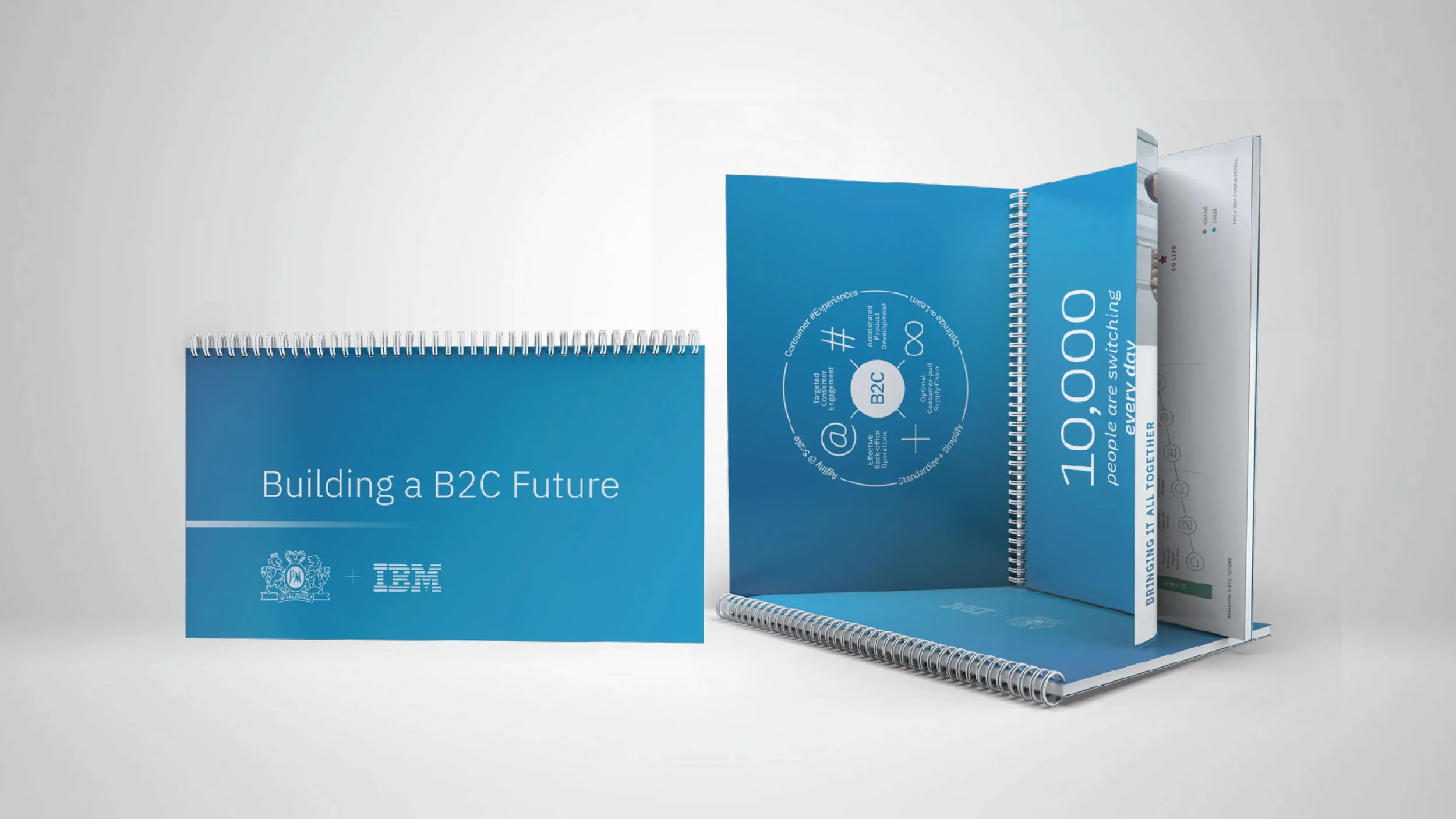
Orals Book (100-page A4 printed volume)
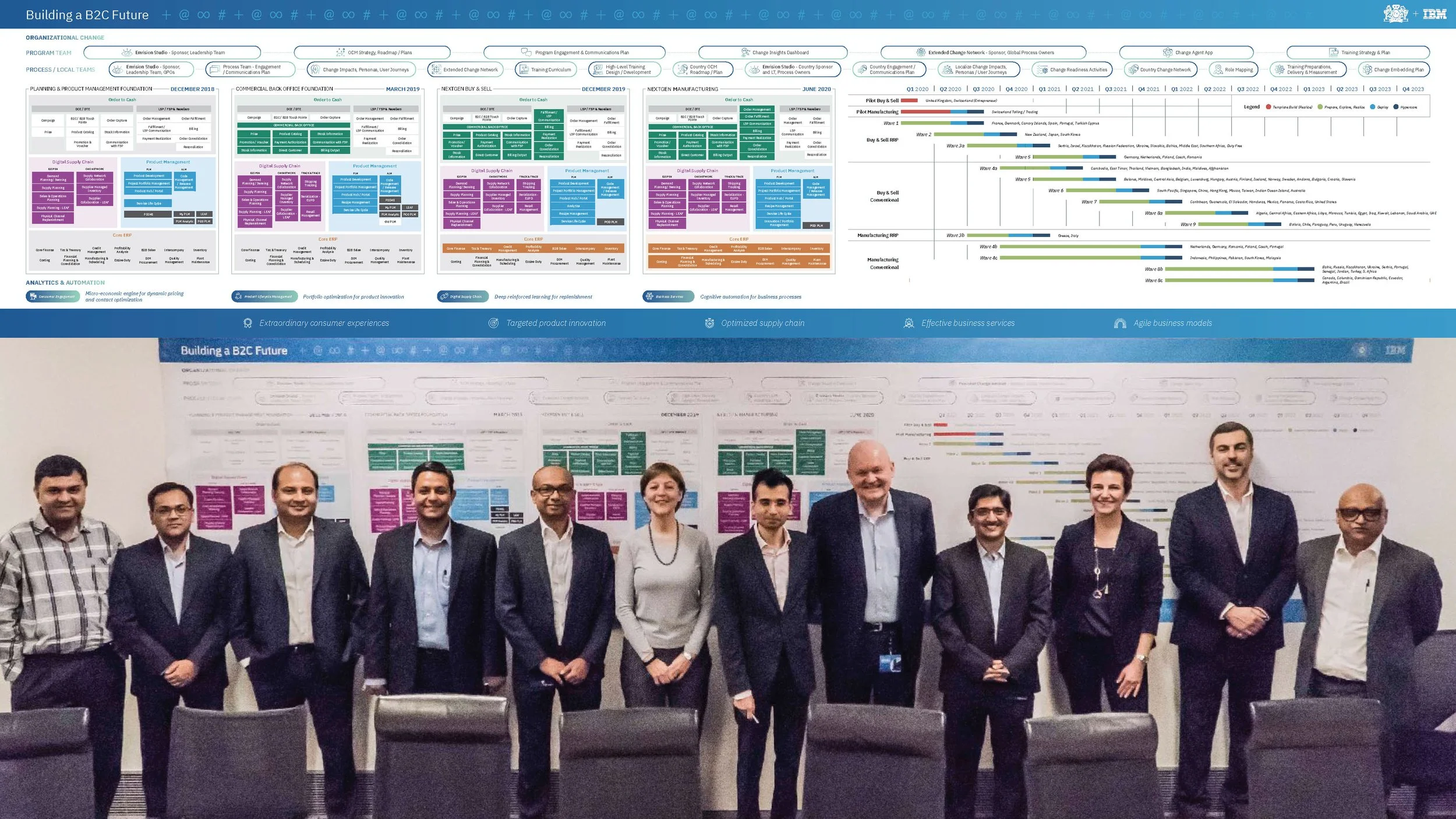
Journey Map Mural (5.6m × 1.3m wall-scale visualization)
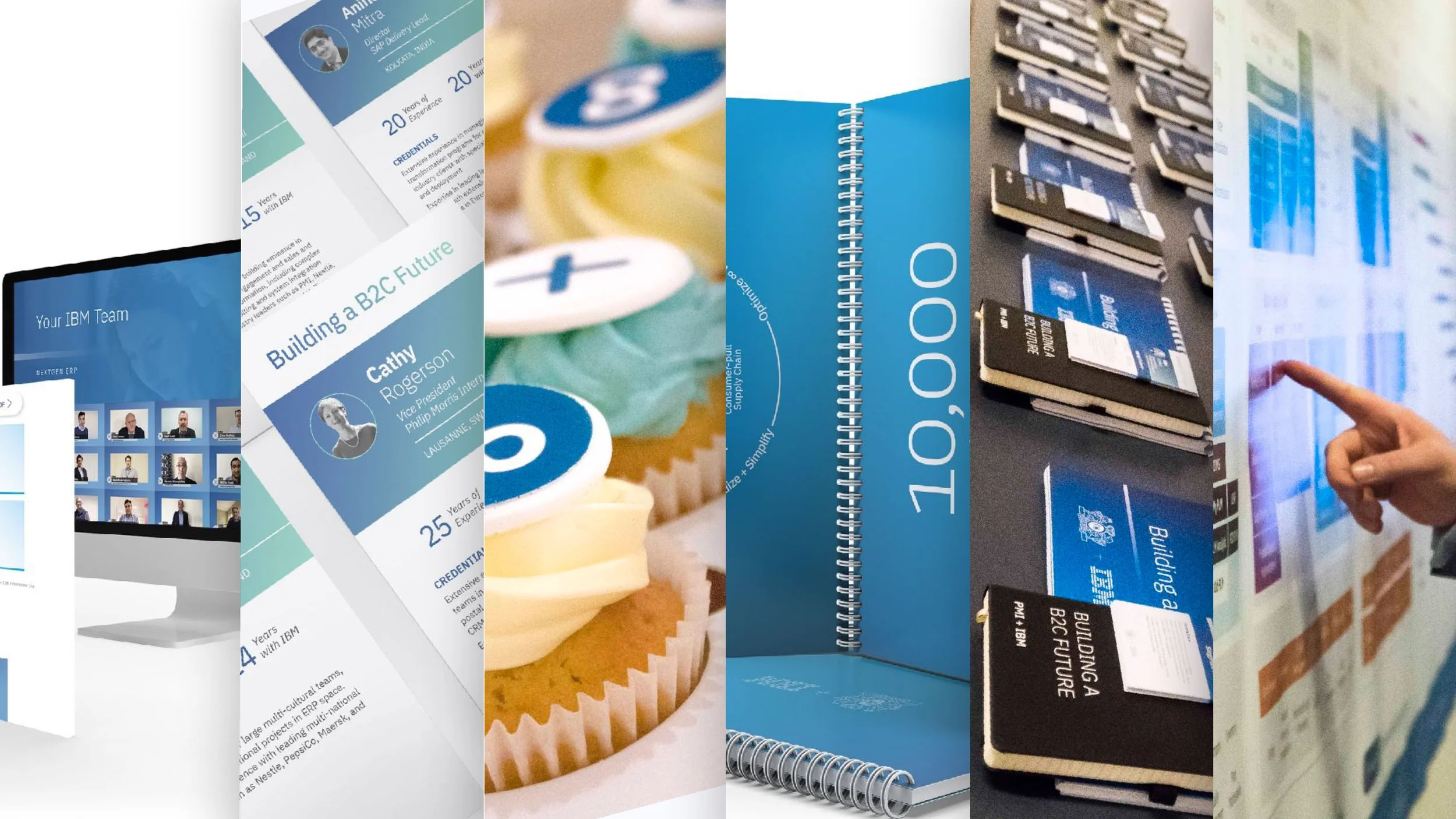
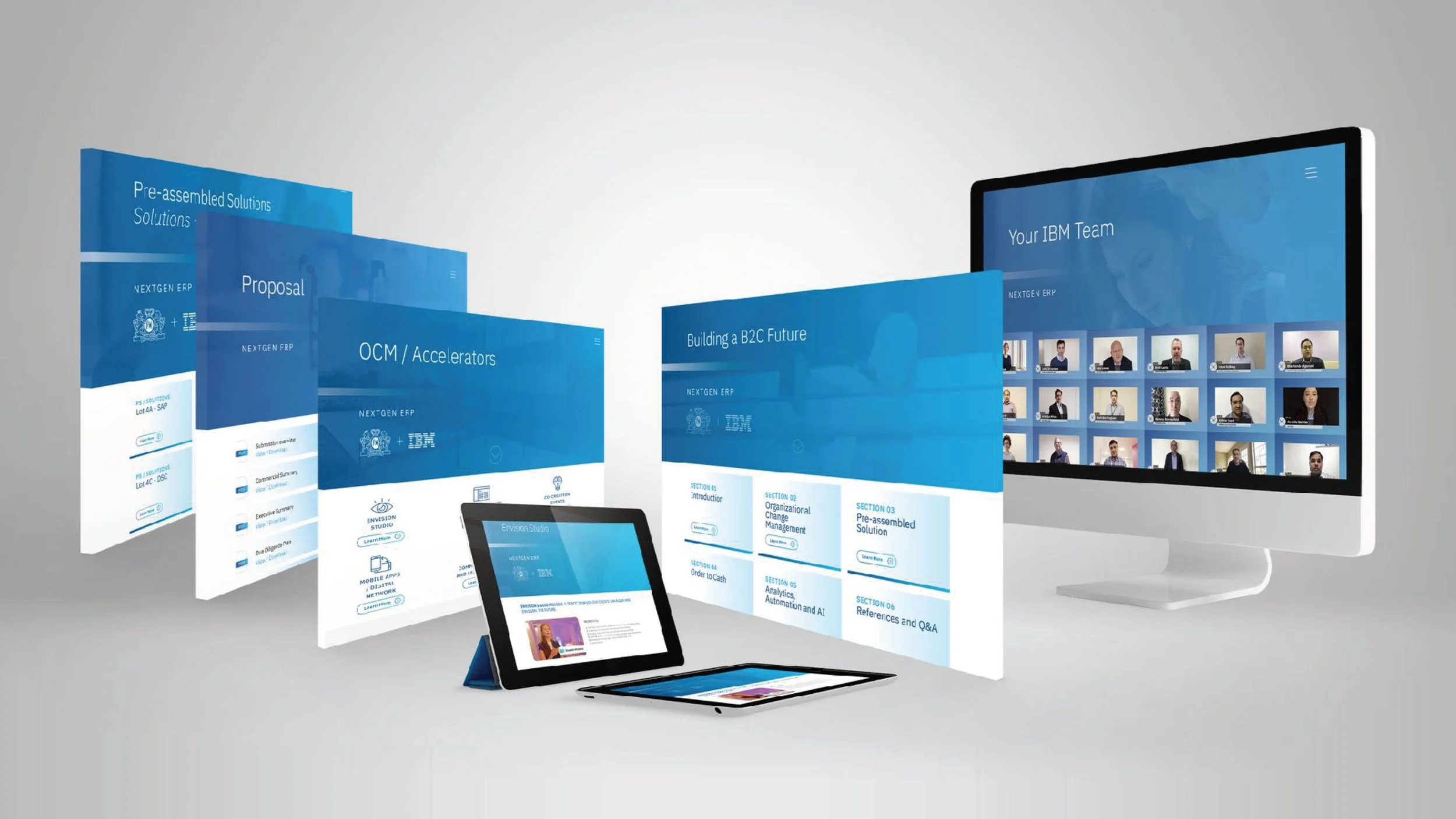
Microsite (48 pages, used as a supplemental and follow-up tool)
Intro / Hero Video (motion-based narrative framing)
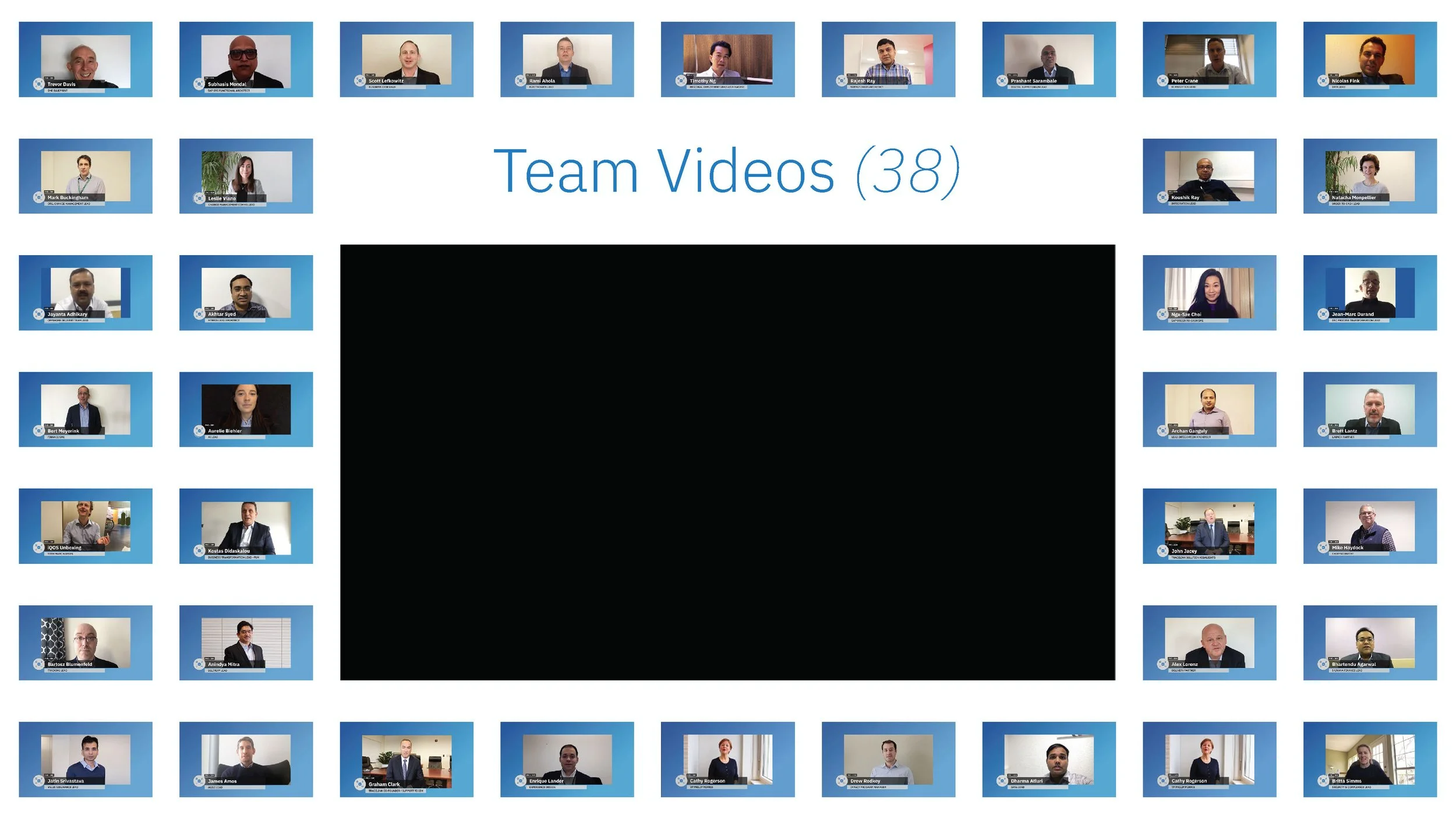
Team Videos (38 individual profiles reinforcing credibility and scale)
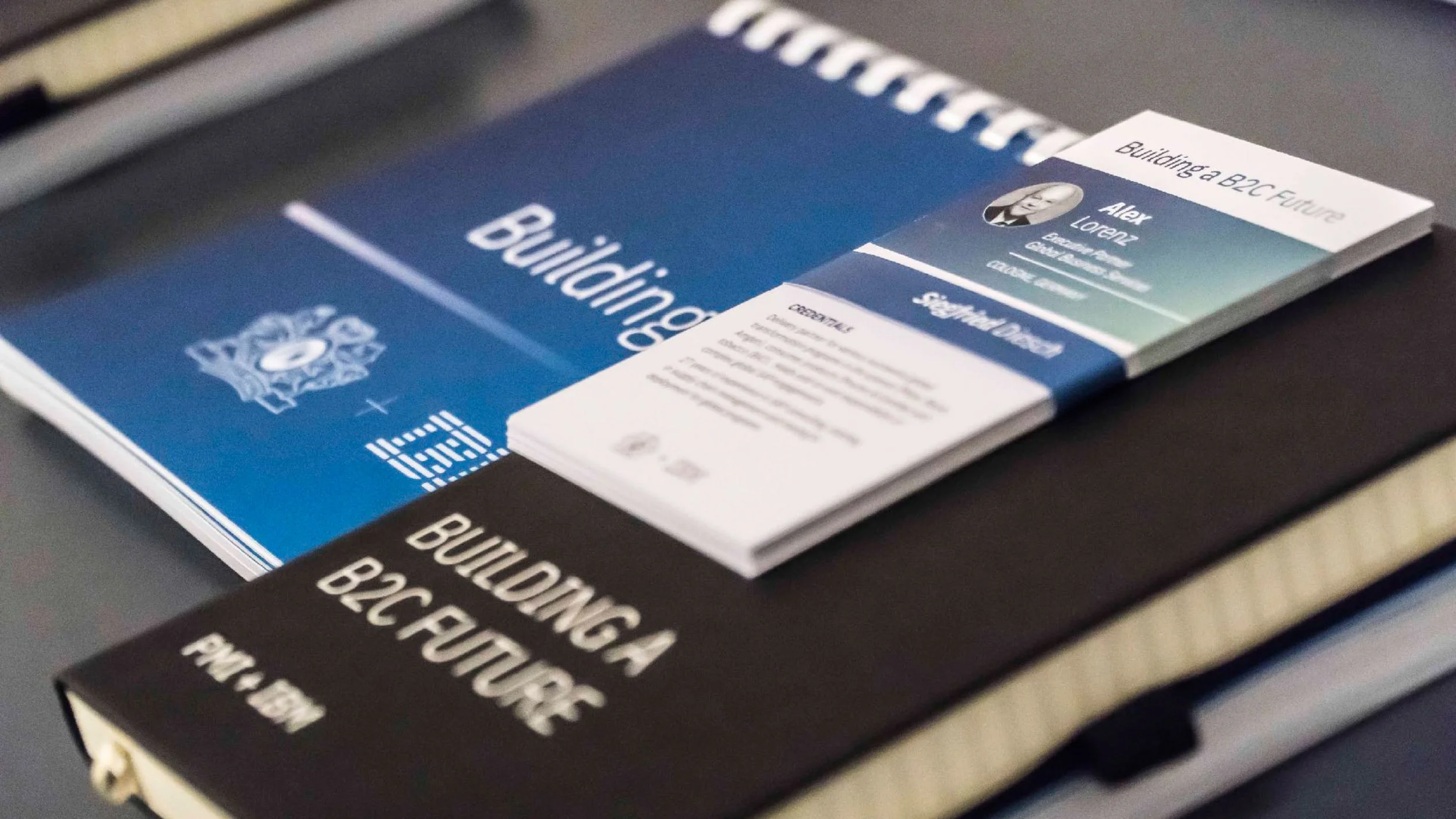
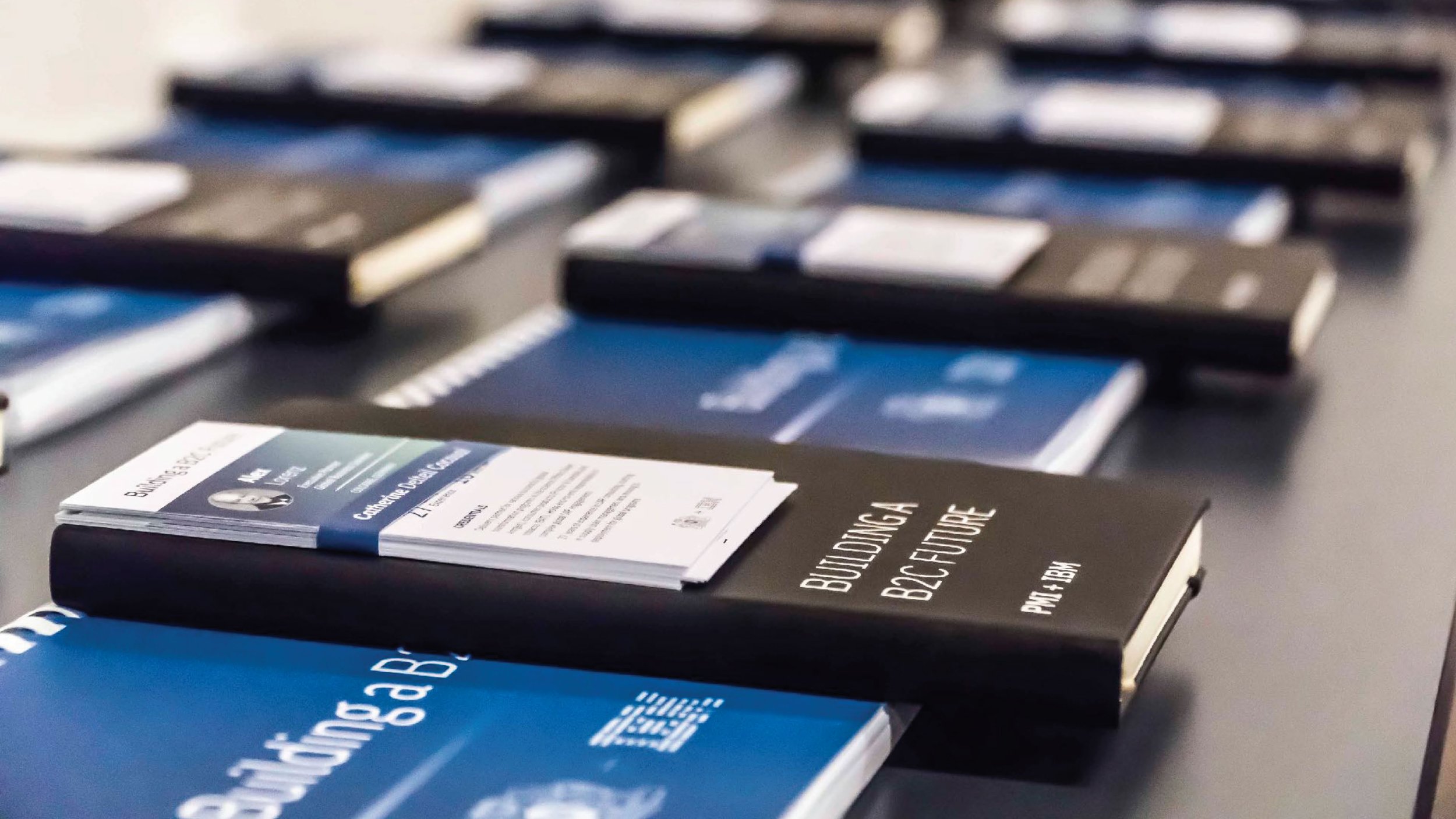
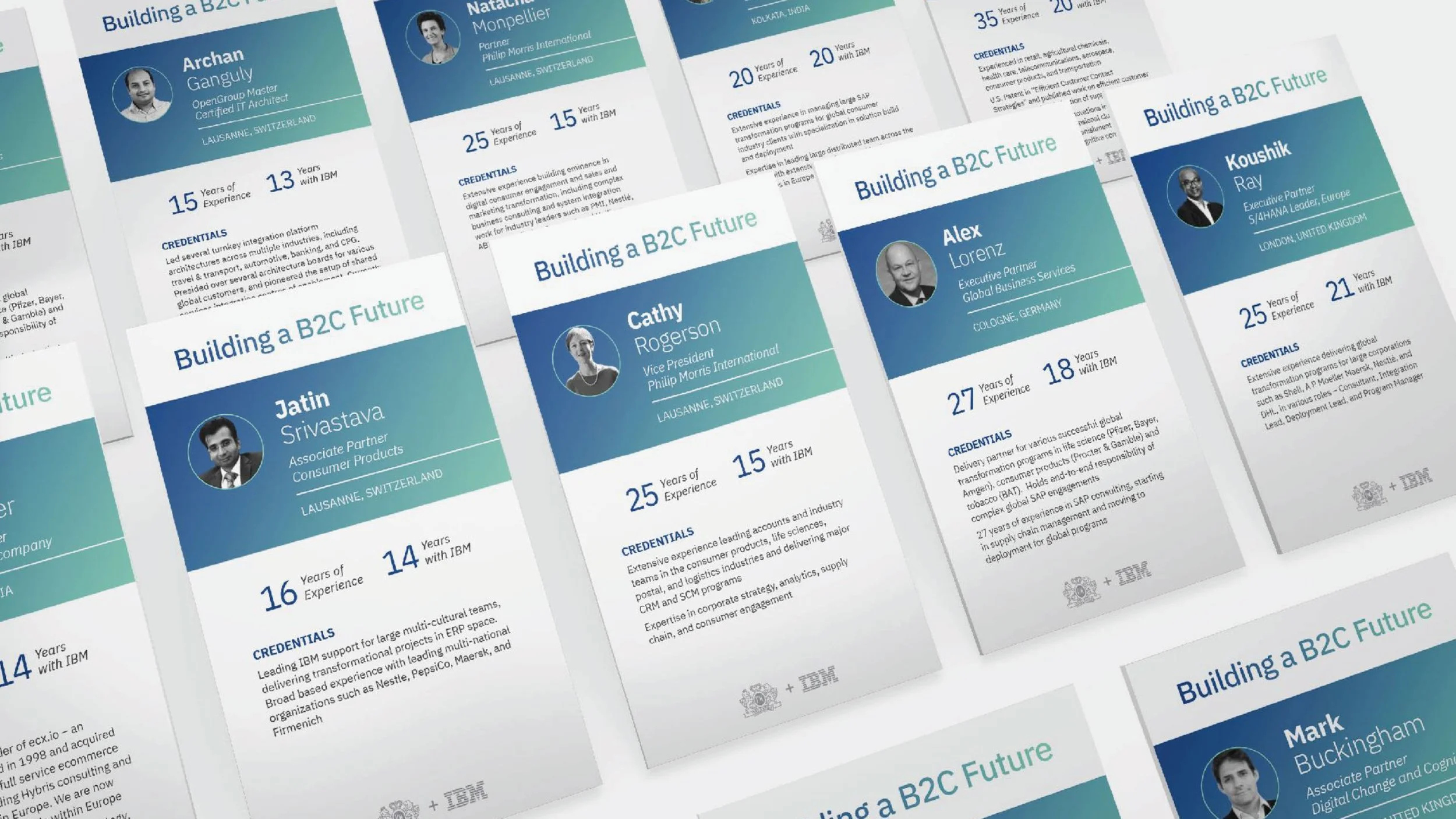
Notebooks & Bio Cards (custom printed executive leave-behinds)
Each deliverable was designed specifically for its medium while reinforcing the same strategic narrative.
-
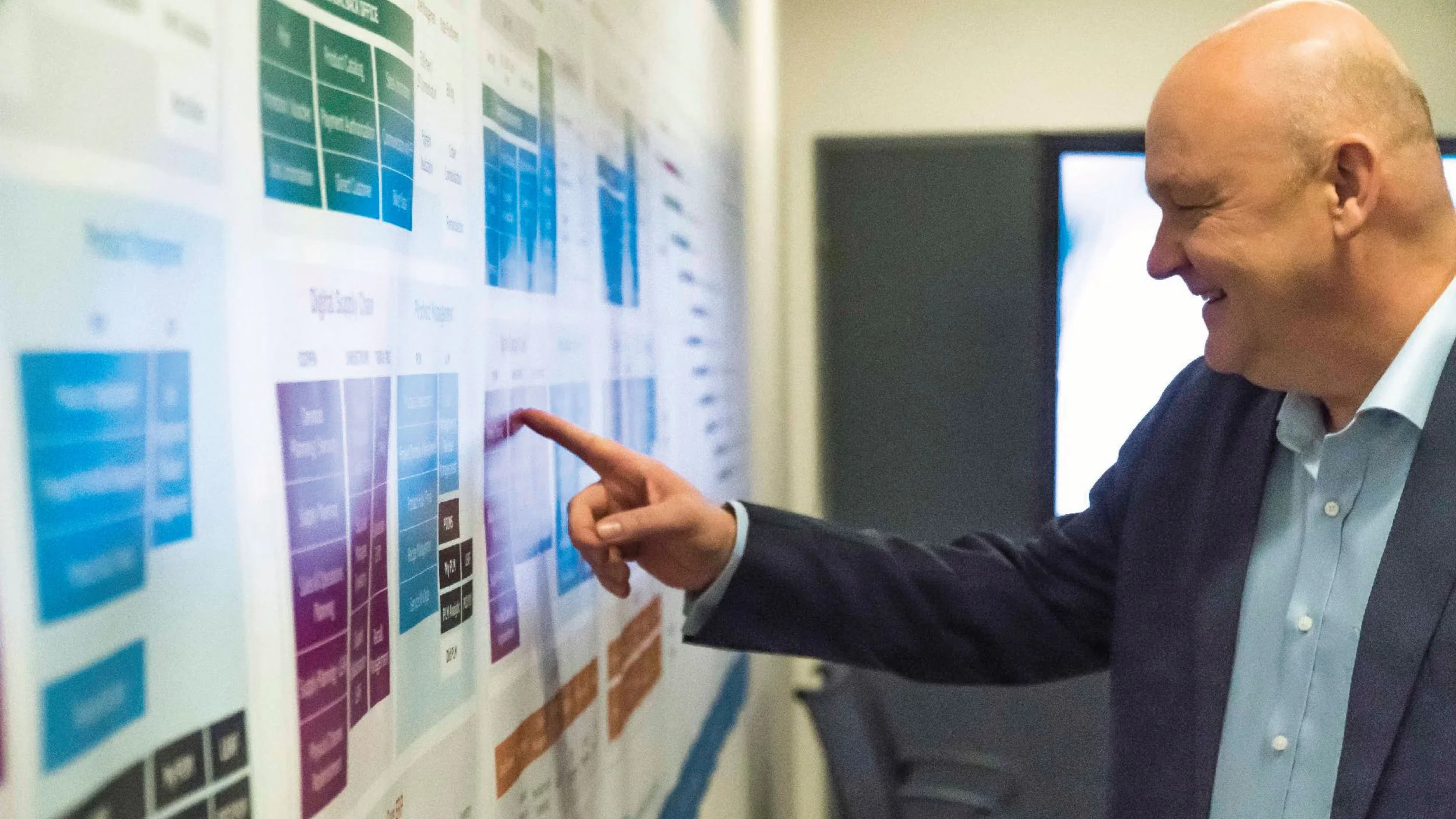
The journey map mural became a focal point of discussion, enabling interactive explanation of complex dependencies
Executives actively engaged with the visuals—photographing sections and requesting additional prints
The microsite extended the engagement beyond the room, serving as a post-meeting reference and follow-up asset
Thoughtful experiential details helped humanize the session and reinforce the quality of the overall experience
-
Positive executive response to the clarity and cohesion of the transformation story
Successful delivery despite shifting requirements and tight timelines
Internal recognition of the approach as a strong model for future executive engagements
Several techniques, multi-modal storytelling, large-scale visualization, and digital follow-ups were adopted in subsequent pursuits
While the engagement concluded with open strategic questions, it was viewed as a successful executive milestone in PMI’s transformation journey.
Key Learnings
Design must match the medium, parallel formats are essential at enterprise scale
Early alignment and rehearsal are critical in executive environments
Embedded design partners can unlock more innovative approaches
Experience design is not just visual, it is emotional, spatial, and human
Why This Project Matters
This project exemplifies how design strategy operates at the enterprise level, not by making information simply look better, but by shaping how complex ideas are understood, discussed, and remembered.
It sits at the intersection of sales enablement, experience design, systems thinking, and executive communication, and reflects a pattern that has continued throughout my career.